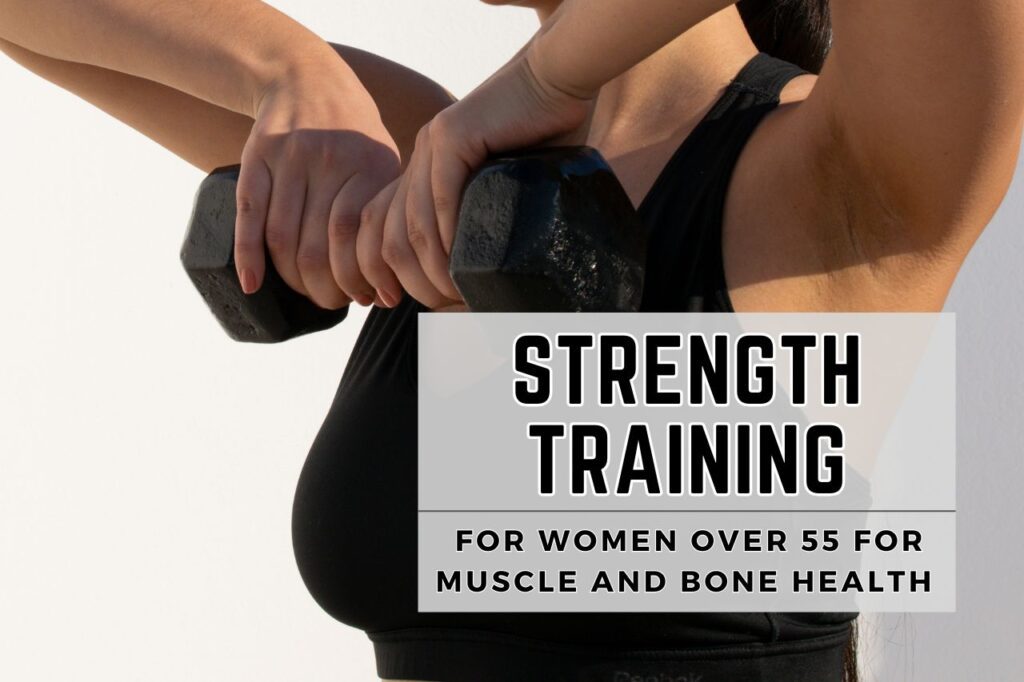
Strength Training for Women Over 55
After menopause, your body changes in ways you feel and ways you do not. Muscle mass declines faster, bone density drops, and balance feels less steady. Strength training for women over 55 is one of the most effective ways to build muscle after menopause and protect postmenopausal bone health. It helps you stay strong, confident, and independent.
Why Strength Training Matters After 55
Muscle loss accelerates after menopause because estrogen levels drop. Less muscle means less strength, lower metabolism, and higher injury risk. Bone density also falls, increasing fracture risk. Strength training for women over 55 addresses both problems. Learn more about the clinical research Here.
Women lose up to 20% of bone density in the first 5–7 years after menopause.
Benefits include:
- Build muscle after menopause
- Improve postmenopausal bone health
- Increase balance and coordination
- Maintain independence in daily life
- Reduce risk of falls and fractures
Key Exercise Types for Bone and Muscle Health
1. Compound Movements
Work multiple muscle groups at once for maximum results. Examples: squats, lunges, push-ups, rows.
2. Weight-Bearing Exercises
These put healthy stress on your bones to improve postmenopausal bone health. Examples: standing dumbbell presses, weighted carries, step-ups.
3. Resistance Band Work
Bands provide constant tension and are joint-friendly. Examples: band pull-aparts, banded side steps.
4. Core and Posture Training
A strong core supports your spine and improves balance. Examples: planks, bird dogs, dead bugs, Pilates style movements.
How to Start Safely
- Begin with two non-consecutive strength sessions per week.
- Warm up with 5 minutes of light cardio and mobility work.
- Choose a weight you can lift for 8–12 repetitions with good form.
- Rest 30 sec – 1 min between sets.
- Focus on controlled movement, not speed.
Sample Beginner Plan
Day 1
- Squats: 3 sets of 10
- Bent-over rows: 3 sets of 10
- Overhead dumbbell press: 3 sets of 10
- Plank (modified): 3 holds for 20 seconds
Day 2
- Step-ups (on an exercise step): 3 sets of 8 each leg
- Push-ups (wall or modified): 3 sets of 8
- Plie squats: 3 sets of 12
- Bird dogs: 3 sets of 8 per side
Common Mistakes to Avoid
- Skipping strength training in favor of only cardio
- Using weights that are too light to challenge the muscles
- Training too infrequently
- Ignoring form and posture
- Forgetting recovery days
Staying Motivated
- Track your progress with photos, strength logs, or bone density scans. Better yet, become aware of the strength you feel in your body.
- Train with a friend or join a group class.
- Set small, measurable goals like increasing your squat weight by 5 pounds in a month.
A Clear Path Forward
If you’d like support putting this into practice safely, I offer osteoporosis-safe strength and balance training inside my app. The program follows a clear, progressive path with guided workouts designed to support bone health, improve stability, and help you build confidence in your body—without high-risk or high-impact movements. It’s an option for those who want more than information and are ready for structured, expert guidance
Building Strong Bones and Muscles: A Complete Guide to Strength

The Ultimate Stretches for Holiday Stress Relief

Celebrating My Birthday and Learning How to Age Well

Exercise and Fall Prevention Made Easy with Strength Training
Why Is Mobility Important for Longevity and Independence