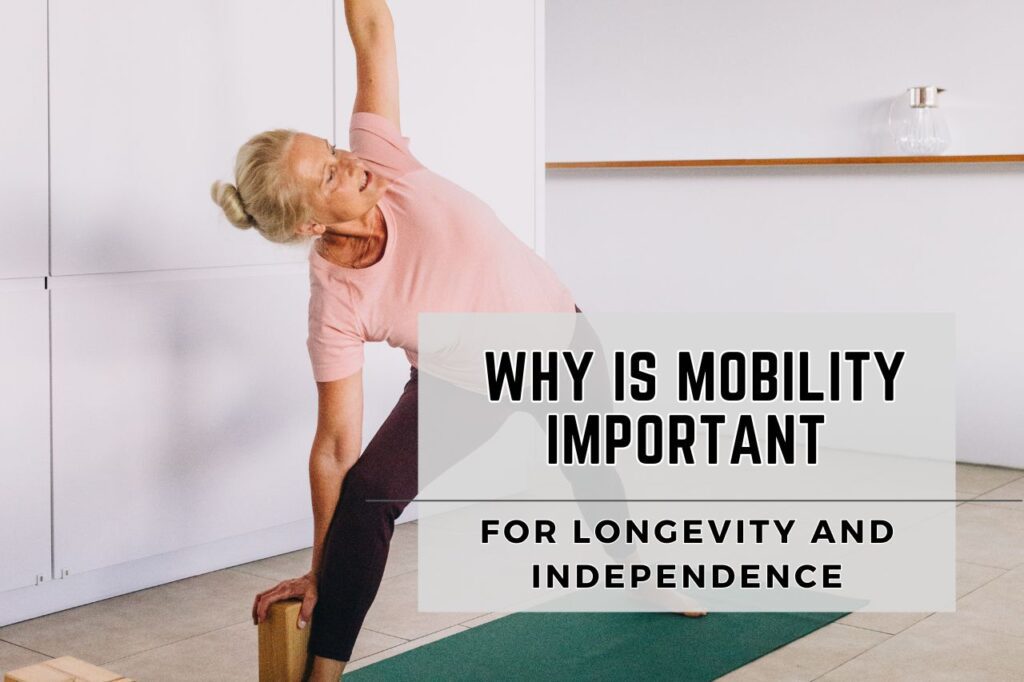
Why Is Mobility Important for Longevity and Independence
Mobility is the foundation of independence. When you move with ease, you stay active, strong, and confident. As we age, maintaining mobility protects bone density, balance, and joint health. It also lowers the risk of falls and supports mental well-being.
For women, after menopause, muscle and bone loss accelerate. Estrogen levels drop, leading to weaker bones, slower walking speed, and reduced balance control. Many women begin to move less out of fear of falling, which increases the risk even more. The solution is to move often and move well.
The Link Between Mobility And Falls
Falls are one of the most common causes of injury for older adults. One in four adults over 65 falls each year. Most falls happen during everyday activities like walking, turning, or reaching. Poor balance, weak legs, and joint stiffness are key risk factors
Improving mobility strengthens muscles that stabilize your hips, knees, and ankles. Better joint movement leads to smoother walking patterns and quicker reactions if you lose balance. Studies show that mobility-focused exercise can reduce fall rates by up to 25 percent in older adults.
Why Is Mobility Important For Bone Density
Strong bones depend on movement. When muscles pull on bones during exercise, they send signals to bone-forming cells to grow stronger. Limited movement leads to weaker bones and higher fracture risk.
Weight-bearing mobility exercises are especially effective. Walking at a brisk pace, climbing stairs, and standing balance work all stimulate bone renewal. Pair these with strength training two to three times per week for the best results.
The Role Of Strength And Balance
Mobility is more than flexibility. It combines balance, strength, and control. When these elements work together, you move confidently and stay stable on your feet.
Key areas to focus on:
• Leg and hip strength to support posture and walking
• Core stability to maintain balance during movement
• Ankle mobility to react quickly on uneven surfaces
• Coordination between upper and lower body for steady gait
A 2019 study in the Journal of Aging and Physical Activity found that older women who performed regular strength and balance training improved walking speed and reduced fall risk in only twelve weeks.
How To Improve Mobility Safely
Start with small, consistent actions. You do not need to train like an athlete to stay mobile. The goal is to move daily and challenge your balance safely.
Begin with these movements:
• Sit-to-stand from a chair to strengthen legs
• Heel-to-toe walking for coordination
• Standing heel raises for ankle control
• Side steps with a resistance band for hip stability
• Seated marches if standing is difficult
If you feel unsteady, hold a sturdy surface for support. Focus on slow, controlled movement. Gradually increase repetitions and range as strength improves.
Walking Speed And Confidence
Walking speed is important to maintaining independence. A steady, brisk pace reflects strength, coordination, and cardiovascular health. Notice your natural pace when walking. Could you safely increase your pace a little?
Practice walking with purpose. Take longer strides, keep your posture tall, and swing your arms naturally. Add short intervals of faster walking or light hill work. These changes train your body to respond quickly, which is essential for preventing falls.
Many women tell me they feel uneasy when stepping onto a curb or walking over uneven ground. They describe feeling unsteady, unsure, or clumsy, especially when their footing changes quickly. This is completely normal as balance, strength, and mobility naturally decline with age if not maintained. One of my favorite exercises to retrain this skill is the Lateral Step-Up.
The lateral step-up builds lower body strength, improves hip and knee stability, and enhances coordination. It closely mimics the movement pattern you use when stepping sideways onto a curb or avoiding an obstacle, helping you move with more confidence in daily life.
How to Perform a Lateral Step-Up
Starting Position:
- Stand beside a sturdy step or low platform (6–10 inches high).
- Keep your feet hip-width apart and your posture tall.
Movement:
- Place the foot closest to the step firmly on top.
- Press through the heel of that foot to lift your body up onto the step, bringing your other foot to lightly touch the surface.
- Slowly lower back down with control, keeping your weight in your working leg.
- Repeat for 8–12 repetitions, then switch sides.
Tips for Success:
- Keep your knee aligned with your toes throughout the movement.
- Avoid pushing off with the lower leg — let the elevated leg do the work.
- Use a wall or chair for support if needed until you build confidence.
- To progress, increase the step height or hold light dumbbells.
Muscles Worked:
- Glutes (especially glute medius for hip stability)
- Quadriceps
- Hamstrings
- Calves

Practicing this exercise two to three times a week strengthens the muscles and coordination needed for safe, confident movement in everyday life. Confidence grows as you move more. Each time you practice balance or strength, your brain learns to trust your body again. Over time, fear of falling fades and your mobility improves naturally.
Protecting Your Joints While Staying Mobile
Many older adults deal with arthritis or joint stiffness. Movement reduces pain and stiffness by improving circulation and lubricating the joints. Choose low-impact options that are joint-friendly but still weight-bearing.
Good examples include:
• Standing yoga poses like Tree or Warrior
• Step-ups on a low platform (details above)
• Controlled squats and lunges (seated marches as an alternative)
• Light resistance band work
• Walking with supportive shoes (good shoes help SO much!)
Avoid sitting for long periods. Even gentle stretching or standing breaks every hour protect your joints and maintain mobility.
Why Is Mobility Important For Confidence And Independence
Mobility gives you freedom. When you move easily, you feel capable and safe doing what you love. Simple tasks like walking outdoors, carrying groceries, or playing with grandchildren depend on strong, coordinated movement.
Regular mobility work also improves mood and mental clarity. Exercise increases endorphins and reduces anxiety, helping you feel more confident in your body. Every small improvement builds trust in your ability to stay independent.
Rebuild Strength, Balance, and Confidence
If you’d like support putting this into practice safely, I offer osteoporosis-safe strength and balance training inside my app. The program follows a clear, progressive path with guided workouts designed to support bone health, improve stability, and help you build confidence in your body—without high-risk or high-impact movements. It’s an option for those who want more than information and are ready for structured, expert guidance.
Final Thoughts
Mobility is not optional. It is essential for healthy aging. Movement keeps your joints flexible, your bones strong, and your balance steady. The more you move, the more confident and capable you become.
Daily movement builds strength. Strength builds confidence. Confidence keeps you independent. Or make it simple, train with me and get strong and supported.

Top Tips To Keep Your Bones Healthy And Strong

Weight Training for Osteopenia: How To Build Stronger Bones

Protein and Bone Health: A Simple Guide

Hydration, Menopause, and Bone Health: The Connection

Lateral Breathing for Core Engagement: A Complete Guide