Lateral Breathing: The Foundation for Core Strength and Stability
Strong bones need strong support systems. While most people focus on lifting heavier or moving more, one of the most powerful tools for building functional strength often gets overlooked: how you breathe. This is where lateral breathing is so important.
Lateral breathing isn’t just a breathing technique. It’s a foundational practice that connects your breath to your core, stabilizes your spine, and supports your pelvic floor. When you learn to breathe laterally, you create the internal stability your body needs to move with confidence and control.
If you’ve ever felt like your core isn’t engaging properly during exercise, or if you struggle with pelvic floor issues, lateral breathing might be the missing piece you’ve been looking for.
What Is Lateral Breathing?
Lateral breathing is when you expand your ribcage outward to the sides and back, rather than letting your belly push forward or your shoulders rise up. You’re directing breath into the sides and back of your ribcage while keeping your core engaged.
Place your hands on the sides of your ribs. As you inhale, you should feel your ribs expand outward against your hands. As you exhale, your ribs draw back inward. Your shoulders stay relaxed, your belly stays relatively quiet, and your core stays active throughout.
This is the breathing pattern used in Pilates and many functional training systems. It allows you to keep your core engaged while still breathing fully and naturally.
The Physical Benefits of Lateral Breathing
Lateral breathing creates stability from the inside out. When you breathe into your ribs this way, you keep your deep core muscles active throughout your entire breath. This gives you a stable foundation for movement and protects your spine.
Think of your core as a support system that wraps around your entire midsection kind of like a corset. It includes muscles at the top, bottom, front, and back that all work together. When one part isn’t working properly, the whole system becomes less effective.
“Lateral breathing isn’t just about where the breath goes. It’s about keeping your core engaged while still breathing fully and naturally.”
Here’s what lateral breathing does for your body:
- Keeps your core engaged during movement
- Protects your spine during exercise and daily activities
- Improves your posture naturally
- Builds internal strength and stability
- Supports the structures around your spine and pelvis
- Takes pressure off your pelvic floor by redirecting breath into your ribs
This becomes especially important as we get older. When bone density and muscle mass naturally decline (if we don’t do something about it), your core support system needs to work efficiently. Lateral breathing strengthens that system from the inside.
The Core Connection
Your core can’t work properly if you’re holding your breath or breathing incorrectly. Many people think core engagement means sucking in your stomach or bracing hard. But real core strength comes from keeping your muscles active while breathing naturally.
Lateral breathing lets you do both at the same time. You breathe fully while your core stays engaged. On the inhale, your ribs expand to the sides while your core stays active. On the exhale, your ribs draw inward and your core naturally gets stronger.
This is the breathing pattern I teach in almonst every workout inside my app. Whether you’re doing a squat, holding a plank, or working on balance, lateral breathing keeps your core working and your spine protected.
When your core is engaged through proper breathing, every exercise becomes more effective. You’re not just going through the motions. You’re moving with control and stability.
The Mental and Emotional Benefits of Lateral Breathing
Breathing isn’t just physical. It’s one of the most powerful tools you have for calming your nervous system. When you breathe slowly and intentionally, you tell your body it’s safe to relax and recover.
Lateral breathing encourages slow, focused breaths. It requires presence. You can’t breathe this way while your mind is racing or your body is tense. The practice naturally brings you into the present moment.
This kind of breathing:
- Reduces stress and tension
- Calms your mind and body
- Helps you feel more in control
- Improves recovery after exercise
- Creates a sense of groundedness
I incorporate lateral breathing into many my classes and nervous system practices. It’s not just for movement. It’s a way to calm your mind, center yourself, and feel more connected to your body. This connection is what makes fitness sustainable and enjoyable over time.
Lateral Breathing in Pilates and Functional Training
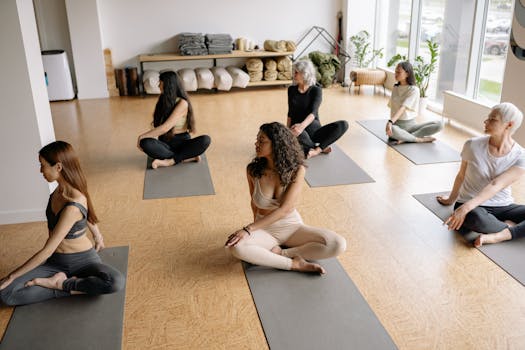 Pilates was built on the foundation of lateral breathing. Joseph Pilates understood that breath and movement work better together. He designed his method to match breath with every exercise, creating strength from the inside out.
In Pilates, you exhale on the effort. When you’re doing something challenging like a leg lift or a dead bug, you breathe out as you perform the hardest part. This naturally makes your core work harder and supports the movement.
Lateral breathing makes this possible. It lets you exhale fully while keeping your core stable. You’re not collapsing or losing strength. You’re using your breath to make the exercise more effective.
This principle works in all types of training. Whether you’re lifting weights, working on balance, or stretching, lateral breathing keeps you stable and connected to what you’re doing.
I weave Pilates principles and lateral breathing into every workout in my program. It’s one of the things that makes this approach different. You’re not just exercising. You’re training your body to move with awareness and control. If you know me, you know I love weaving awareness into everything I teach.
When to Use Lateral Breathing vs. Belly Breathing
Here’s something important to understand. There are many different techniques of breathing. Diaphramatic breathing aka belly breathing is also a common teaching technique (where your belly expands on the inhale). Both lateral breathing and belly breathing have their place.
Belly breathing is wonderful for relaxation, stress relief, and calming your nervous system. It’s perfect for moments when you’re winding down, doing breathwork, or focusing on deep rest. It’s a great calming breathing technique to practice daily.
Lateral breathing is what you use during core engagement and exercise. It’s the breathing pattern that allows you to keep your core active while still breathing fully. When you’re holding a plank, lifting weights, doing Pilates, or working on balance, lateral breathing is your tool.
Think of it this way: belly breathing for relaxation, lateral breathing for activation. Both are valuable. Both serve different purposes in your wellness practice.
“Belly breathing for relaxation, lateral breathing for activation. Both are valuable. Both serve different purposes in your wellness practice.”
How to Practice
Learning lateral breathing is simpler than you might think. I’m going to walk you through it step by step, and I’ll share my favorite method for really feeling how it works.
Start with the basics:
Sit or stand with good posture. Place your hands on the sides of your ribcage. Let your shoulders relax.
Inhale slowly through your nose. Focus on pushing your ribs out to the sides into your hands. Imagine your ribcage is an unbrella expanding outward. You should feel your ribs widen to the sides and back. Your belly stays relatively quiet, and your shoulders don’t rise up.
Now here’s the key part – the straw method:
Exhale by pursing your lips together as if you’re blowing through a straw. This small opening creates natural resistance and helps you really feel your core engage.
As you blow out through your pursed lips, notice what happens in your midsection. You should feel your belly gently draw inward and upward. That’s your core engaging. Your ribs draw back in toward center. This is what core engagement through breath feels like.
Practice this several times. Inhale into your ribs. Exhale through pursed lips like you’re blowing through a straw. Feel your core work.
Once you get the feel for it:
Try it during simple movements. Stand on one foot and breathe laterally while holding your balance. Hold a plank for a few breaths while keeping this breathing pattern. The more you practice, the more natural it becomes.
The straw method is a game-changer for really understanding the connection between breath and core. It gives you instant feedback about what’s working.
Bringing It All Together
Lateral breathing is one of those practices that seems simple but creates profound changes in how your body functions. It strengthens your core, supports your pelvic floor, protects your spine, and calms your nervous system. It’s a skill that translates directly into better movement, better posture, and better overall function.
Inside my app, I have a full tutorial to guide you through the technique while also cueing it during every workout. You’ll learn how to coordinate your breath with your movement, how to maintain core engagement without holding your breath, and how to use your breath as a tool for strength and stability.
If you’re ready to train in a way that honors your body’s need for internal support and functional strength, join my app today. Every session is designed to build the foundation you need for strong bones, a stable core, and confident movement.
Strength Without Stress! Let’s get strong together.

Top Tips To Keep Your Bones Healthy And Strong

Weight Training for Osteopenia: How To Build Stronger Bones

Protein and Bone Health: A Simple Guide

Hydration, Menopause, and Bone Health: The Connection

Benefits of Lemon Water: Easy Habit, Big Impact on Your Health