

Aparigraha Meaning: How to Let Go With Love
Have you noticed how much stuff fills your life? Too many shirts to count crowding your closet space? Notifications flooding your devices? Mental attachments overtaking your thoughts? The result feels like carrying someone else’s heavy backpack through each day. Your energy drains from trying to maintaining all these connections.
We talk about decluttering our homes but what about decluttering our minds and hearts? What if our attachments are hijacking us from experiencing peace?
This is where the yogic principle of Aparigraha invites us to pause and reconnect with the freedom of letting go.
What Is Aparigraha? Understanding Its Meaning
The aparigraha meaning comes from three Sanskrit components: “a” (non), “pari” (all sides), and “graha” (to take or seize). Traditionally translated as non-possession or non-attachment, aparigraha represents taking only what serves our needs and releasing what no longer serves.
In modern yoga practice, the aparigraha meaning extends to holding things lightly, knowing everything changes. Bad times won’t last forever but good times won’t either. The essence of aparigraha encourages us to enjoy life without grasping. When we practice this principle, we create space for new possibilities and live in a place of more simplicity.
Aparigraha in Thought: Releasing Mental Clutter
One overlooked form of attachment happens in our minds. We collect worries, regrets, expectations, and judgments that create mental clutter. These thought patterns drain our energy without producing anything useful.
Practicing the aparigraha meaning in thought looks like:
- Letting go of past conversations that replay in your mind
- Releasing expectations about how others should behave
- Noticing when you fixate on future outcomes
- Recognizing when you compare yourself to others
Put into Practice: The part of the brain responsible for this negative self-talk is called the amygdala. When I notice this happening in myself, I call out Ms. Amygdala, and tell her to settle down and remind her that I have everything under control. Seems a little silly, but I find speaking it verbally to myself outloud turns the noise down a notch or two. Each time we are able to release a mental attachment, we create space for more clarity and presence.
Material Simplicity: Taking Only What Serves You
Our consumer culture tells us more equals better. The aparigraha meaning challenges this idea. The practice invites us to consider:
- Do your possessions serve a purpose or take up space?
- Do you buy things from genuine need or emotional impulse?
- Can you appreciate something without owning it?
- What happens when you wait before making a purchase?
Put Into Practice: In our world of constant algorithims we are being marketed to on the daily. Advertisements arrive on our phones prompted by our keystrokes. I have a rule I live by. When I am considering purchasing something I am wanting (not a need), I sleep on it. Usually the next morning I will have clarity on whether I really need to purchase the item or pass. Living with intention allows resources to flow where they matter most.
Relationships Without Possession
Attachment in relationships creates suffering. When we try to control others or depend on them for our happiness, we set ourselves up for disappointment.
Applying the aparigraha meaning to relationships means:
- Loving without controlling
- Supporting without imposing expectations
- Giving space for growth and change
- Accepting that people come and go from our lives
Put Into Practice: Everyones path is just that THEIR path. I allow loved ones to explore their dharma or path and support them in the unravelling. This approach creates healthier connections based on freedom rather than dependency.
Everyday Practices for Non-Attachment
Small shifts can make big differences in your experience of aparigraha:
- Declutter one small area each week
- Practice giving away something you like but could live without
- Notice when you feel possessive and breathe through the sensation
- Set boundaries with digital consumption
- Create regular moments of emptiness in your schedule
Put Into Practice: Yoga Nidra is my go-to tool for creating more space for presence. Sometimes, the best thing we can do for ourselves is just BE. Remember that non-attachment creates freedom, not deprivation.
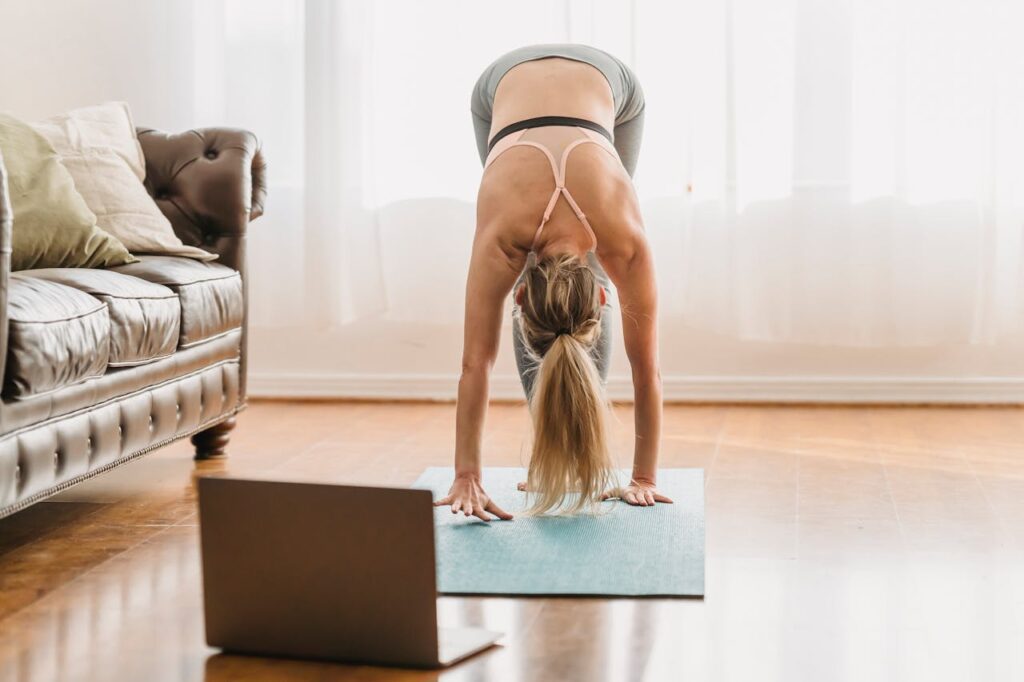
Yoga Pose to Embody Aparigraha: Forward Fold (Uttanasana)
This simple posture helps us practice surrender. Stand tall, then hinge at your hips to fold forward. Let your upper body hang heavily. Bend the knees as much as feels good for you. Feel how gravity pulls you down as you release tension in your neck and shoulders. This posture physically demonstrates letting go. Stay for five deep breaths, releasing a little more with each exhale.
Breathing Practice for Aparigraha: Complete Exhale
Our breath offers a perfect metaphor for the aparigraha meaning. We must fully exhale before we can receive a fresh breath. Try this:
- Sit comfortably with an upright spine
- Inhale normally through your nose
- Exhale completely, pushing all air out
- At the bottom of your exhale, pause briefly to notice the emptiness
- Allow the next breath to arrive naturally
Practice this for three minutes, focusing on the release and the space between breaths.
My Journey with Aparigraha
For years, I struggled with perfectionism. I held tight to expectations about career goals, relationships, and self-image. These attachments caused anxiety when reality was different from my plans.
The turning point came when I noticed how much mental energy went into maintaining these expectations. I had convinced myself that if I were proactive enough I could control every outcome, my own and others. This is a big misunderstanding and sets us up for disappointment and even guilt.
I started making decisions from a place of presence rather than attachment to outcomes. Projects flowed more naturally. Relationships felt lighter. Even disappointments became easier to work through. Now, I know growth happens in the uncomfortable spaces. Of course, it’s not fun navigating these challenges but growth is the reward.
The true aparigraha meaning taught me that holding on creates tension while letting go creates possibility.
Questions for Reflection
Where do you feel the weight of attachment in your life right now? What might become possible if you loosened your grip in that area? Consider trying one small practice of letting go this week and notice what happens.
Previous Articles in This Series:
I believe in blending lived experience with evidence-based insight. If you’re curious to explore more, here are some of the trusted sources that informed this article.
References
- Adele, D. (2009). The Yamas & Niyamas: Exploring Yoga’s Ethical Practice. On-Word Bound Books.
- Desikachar, T.K.V. (1999). The Heart of Yoga: Developing a Personal Practice. Inner Traditions.
- Iyengar, B.K.S. (1979). Light on Yoga. Schocken Books.
- Judith, A. (2004). Eastern Body, Western Mind: Psychology and the Chakra System As a Path to the Self. Celestial Arts.
- Patanjali. The Yoga Sutras of Patanjali. Translation by Swami Satchidananda (2012). Integral Yoga Publications.
- Shah, S. (2020). The 5th Yama – Aparigraha: 5 Ways You Can Practice True Non-Attachment. Art of Living.
- Stryker, R. (2011). The Four Desires: Creating a Life of Purpose, Happiness, Prosperity, and Freedom. Delacorte Press.
- Swenson, D. (1999). Ashtanga Yoga: The Practice Manual. Ashtanga Yoga Productions.

Candy Price
About the writer:Candy Price is a Certified Personal Trainer (NASM), yoga and Pilates teacher, and founder of Harvesting Health and Happiness. With decades of experience in healthcare and movement, she’s on a mission to help women in midlife and beyond break free from outdated fitness rules and reclaim their strength, energy, and confidence. Her work blends science-backed training, unapologetic self-care, and soul-deep mindset shifts to help women rise strong through the transitions of aging—with peace, power, purpose, and zero apologies.
Read More

Hydration, Menopause, and Bone Health: The Connection

Lateral Breathing for Core Engagement: A Complete Guide

Benefits of Lemon Water: Easy Habit, Big Impact on Your Health

Building Strong Bones and Muscles: A Complete Guide to Strength

The Ultimate Stretches for Holiday Stress Relief
