Protein and Bone Health: The Basics That Actually Work
Protein and bone health go hand in hand, and getting enough of it at the right times can make a real difference. This article breaks down why protein matters for your bones, how much you actually need, and the simplest way to get more of it throughout your day.
Why Protein Matters for Bone Health
About one-third of your bone’s structure is made of collagen – a protein. That collagen framework gives your bones their flexibility and resistance to fracture. Without it, even a calcium-rich bone becomes brittle.
Protein also affects how well your body absorbs and uses calcium. When you don’t eat enough, your body has a harder time holding onto the calcium you consume. So if you’re taking a calcium supplement but skimping on protein, you may not be getting the full benefit.
As we age, bone breakdown naturally speeds up. Getting enough protein every day is one of the most direct things you can do to slow that process and protect your bone density. For those going throughmenopause, when estrogen drops and bone loss accelerates, this becomes even more important.
“About one-third of your bone structure is made of collagen – a protein. Bone health and protein go hand in hand.”
How Much Protein Do You Actually Need?
The standard RDA for protein is 0.8 grams per kilogram of body weight. This number is the minimum to avoid deficiency. However, this amount is not enough to support muscle maintenance, bone health, or physical performance as you age.
Research and organizations like The Menopause Society recommend that adults in midlife aim for 1.0 to 1.2 grams per kilogram of body weight per day, especially when paired with regular exercise. That’s a meaningful step up from the general recommendation.
Daily Protein Goal for Midlife Adults:
Aim for 1.0 to 1.5 grams of protein per kilogram of your preferred body weight each day. Example: Someone whose preferred weight is 150 pounds (about 68 kg) would aim for 68 to 102 grams of protein daily, depending on activity level and goals.
Spread It Throughout the Day
Getting enough total protein matters, but so does when you eat it. A lot of people eat very little protein at breakfast and lunch, then load most of it into dinner. The problem is your body can only use so much protein at one sitting for muscle repair and bone support.
Spreading your protein throughout the day, at every meal and every snack, is far more effective than concentrating it all in one meal. Think of it less like a daily quota to hit and more like a steady rhythm of nourishment your body can actually use.
“Eat protein throughout the day. That one habit does more for your bones and muscles than any supplement.”
A Simple Daily Blueprint
You don’t need to count every gram. Just make sure protein shows up at every meal and every snack. Here’s what that looks like in practice:
At Each Meal – Aim for 20 to 30 Grams
- 3 eggs with a side of cottage cheese
- A palm-sized piece of chicken, fish, or lean beef
- A cup of Greek yogurt with nuts
- A hearty lentil soup with meat or cheese on the side
At Each Snack – A Small Protein Boost
- A hard-boiled egg
- A small handful of almonds or walnuts
- String cheese or a few slices of deli turkey
- A few spoonfuls of cottage cheese or hummus with veggies
The most important thing: eat protein throughout the day. Don’t worry about hitting a perfect number. Just make sure it’s on your plate every single time you eat.
The Best Protein Sources for Bone Health
Some protein sources pull double duty, supporting both muscle and bone health:
- Bone broth — Rich in collagen and minerals. Use it in soups or sip it warm.
- Eggs — Complete protein, affordable, and versatile. Don’t skip the yolk. I raise my own hens so this is a daily staple of mine.
- Greek yogurt — High in both protein and calcium. A strong choice at any meal or snack.
- Chicken, turkey, and lean beef — Reliable, complete protein sources. Easy to build meals around.
- Salmon and sardines — Protein plus omega-3s, which also help reduce inflammation that contributes to bone loss.
- Lentils and beans — Great plant-based options. Pair with a grain like rice or quinoa to get all the essential amino acids.
- Cottage cheese — High in protein and calcium. Underrated and easy to add anywhere in your day. Check out my high protein pancake recipe below, cottage cheese is the secret weapon!
Protein Works Better When You Move
Protein and strength training work together. Weight-bearing exercise sends signals to your muscles and bones to rebuild and strengthen. Protein provides the raw material to make that happen. One without the other leaves results on the table.
Try to eat a protein-containing snack or small meal within a couple of hours after you work out. Your body is most ready to use it right after exercise.

High Protein Pancakes
Ingredients
- 1/2 cup egg whites
- 1 egg large
- 1/2 cup quick oats dry
- 1/2 cup cottage cheese low-fat
Instructions
- Add all ingredients to a bowl and use an immersion blender to blend until smooth (use a regular blender if you don’t have an immersion blender)
- Heat a non-stick skillet over medium heat and lightly spray (I use avocado oil spray)
- Use a 1/4 cup measure to pour batter into pancakes and cook 1–3 minutes per side, until set and golden
- Serve as-is or top with fruit, syrup, honey, or nut butter
Notes
Final Thoughts
Protein is one of the simplest, most effective things you can do for your bones and your strength in midlife. Here’s what to remember:
- About one-third of bone is made of collagen, protein is a structural necessity
- Most adults need more protein than the standard RDA as they age
- Aim for 1.0 to 1.5 grams per kilogram of preferred body weight daily
- Target 20 to 30 grams at each meal
- Include a small protein source at snacks too
- Don’t obsess over numbers, just make sure protein is present every time you eat
- Pair it with movement for the biggest benefit
Start this week by looking at your meals and asking one simple question: is there a quality protein source here? That small, consistent shift adds up more than you might think.
Ready to Build Stronger Bones?
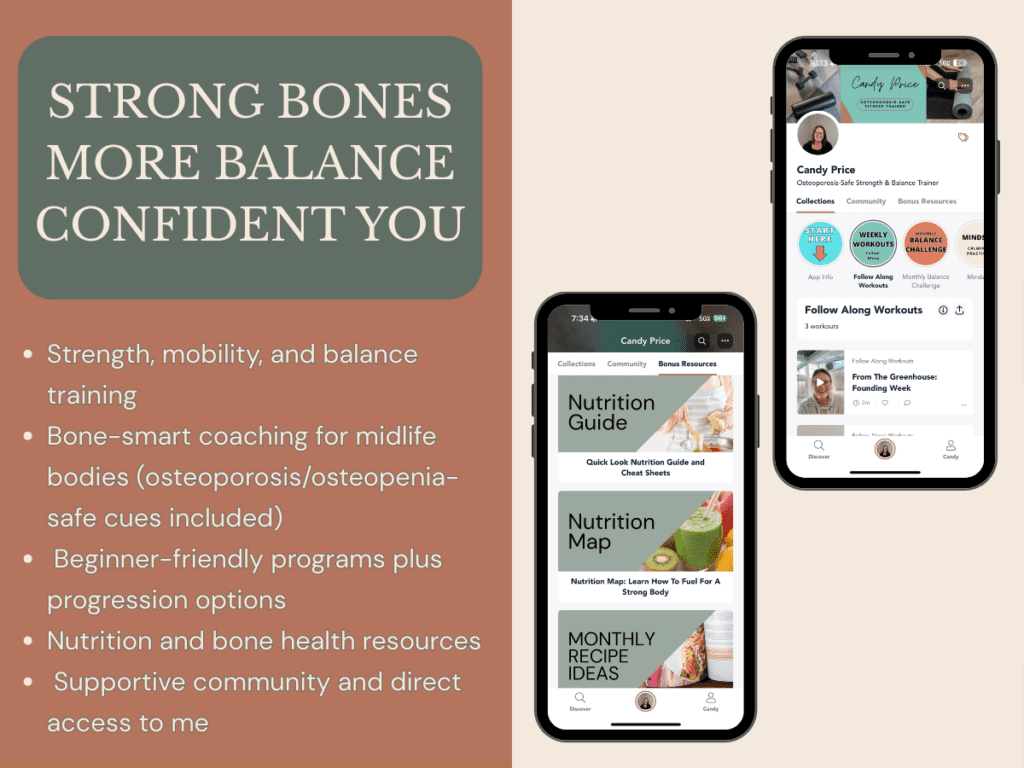
I’m Candy Price – Certified Personal Trainer and movement specialist with 20+ years in healthcare. I help people build stronger bones, better balance, and real confidence. If you’re ready to take the next step, I’d love to have you inside my program →Learn More Here

Top Tips To Keep Your Bones Healthy And Strong

Weight Training for Osteopenia: How To Build Stronger Bones

Hydration, Menopause, and Bone Health: The Connection

Lateral Breathing for Core Engagement: A Complete Guide

Benefits of Lemon Water: Easy Habit, Big Impact on Your Health